


Overview of Common Laboratory Apparatus and Their Uses
Here is the complete list of 50 common laboratory apparatus with their names, uses, pictures, and a free downloadable PDF. These tools—like beakers, flasks, pipettes, and burettes—are essential for measuring, heating, mixing, and conducting experiments in science labs.
Lab work depends on the right tools and how they’re used. This guide organizes common laboratory apparatus by essentials, extended tools, and a full comprehensive set. This guide covers common laboratory apparatus and laboratory equipment—including chemistry lab equipment—organized into practical lists for schools, colleges, and research labs. Each item includes practical uses and a purchase-ready mapping into Glacier India’s categories to help you go from learning to procurement without friction.
Tip: Start with the 20 essentials for school and college practicals. Add the extended sets as your experiments and safety requirements expand.
The following sections also serve as a practical laboratory equipment list, organized into 20, 35, and 50 items with their uses.
20 Common Laboratory Apparatus and Their Uses
These laboratory equipment lists show the most common apparatus and devices used in chemistry and general labs. Core tools for everyday practicals in chemistry and biology labs. Designed for repeat classroom use and foundational experiments.
Beaker — A common laboratory apparatus
Use: Mixing, heating, and rough volume handling. The beaker diagram typically shows its lip, spout, graduations, and base, which explain how it is safely used in chemistry labsCategory: Glassware › Beakers
Conical flask (Erlenmeyer)
Use: Swirling solutions without spillage, titration setups. Category: Glassware › Flasks
Volumetric flask
Use: Preparing precise standard solutions. Category: Glassware › Volumetric
Graduated cylinder
Use: Accurate liquid measurements. Category: Glassware › Cylinders
Burette
Use: Controlled dispensing for titrations. Category: Glassware › Burettes
Pipette (volumetric/transfer)
Use: Precise aliquoting of liquids. Category: Glassware › Pipettes
Test tube
Use: Reaction handling, heating small volumes. Category: Glassware › Test tubes
Test tube rack
Use: Holding and organizing tubes. Category: Plasticware › Racks
Dropper
Use: Dispensing small drops of reagents. Category: Plasticware › Droppers
Watch glass
Use: Evaporation, covering beakers. Category: Glassware › Watch glass
Funnel
Use: Transfer, filtration with paper. Category: Glassware › Funnels
Filter paper
Use: Solid–liquid separation. Category: Consumables › Filter paper
Crucible with lid
Use: Strong heating of solids. Category: Ceramics › Crucibles
Evaporating dish
Use: Solvent evaporation, concentration. Category: Ceramics › Evap dishes
Test tube holder / tongs
Use: Safe handling while heating. Category: Metalware › Tongs
Tripod stand & wire gauze
Use: Stable heating platform. Category: Metalware › Stands
Bunsen burner or spirit lamp
Use: Flame heating. Category: Heating › Burners
Thermometer
Use: Temperature measurement. Category: Measurement › Thermometers
pH paper / indicator
Use: Quick acidity/alkalinity checks. Category: Consumables › Indicators
Safety goggles & lab coat
Use: Personal protection. Category: Safety › PPE
35 Laboratory Apparatus and Their Uses
These laboratory equipment lists show the most common apparatus and devices used in chemistry and general labs. Adds precision, separation, and biology tools for higher-level practicals.
Pipette filler / bulb
Use: Safe pipetting control. Category: Plasticware › Pipette controllers
Wash bottle
Use: Rinsing glassware. Category: Plasticware › Wash bottles
Desiccator
Use: Moisture control for samples. Category: Glassware › Desiccators
Mortar and pestle
Use: Grinding solids. Category: Ceramics › Mortar & pestle
Hot plate
Use: Controlled heating. Category: Heating › Hot plates
Magnetic stirrer
Use: Homogeneous mixing. Category: Mixing › Magnetic stirrers
Retort stand with clamp
Use: Secure apparatus setups. Category: Metalware › Retort stands
Separatory funnel
Use: Liquid–liquid extraction. Category: Glassware › Separatory funnels
Condensers (Liebig)
Use: Distillation cooling. Category: Glassware › Condensers
Round-bottom flask
Use: Heating under reflux. Category: Glassware › RBF
Adapter & stoppers
Use: Sealed connections. Category: Glassware › Adapters
Buchner funnel
Use: Vacuum filtration. Category: Filtration › Buchner
Vacuum pump
Use: Reduced pressure processes. Category: Filtration › Pumps
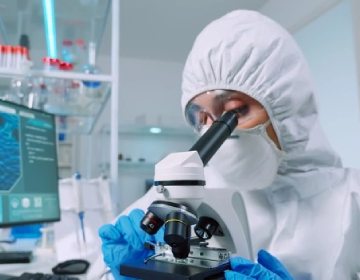
Microscope (student)
Use: Basic microscopy. Category: Biology › Microscopes
Slides & coverslips
Use: Specimen preparation. Category: Biology › Slides
Petridish
Use: Culture growth. Category: Biology › Petri dishes
Inoculating loop
Use: Transfer microbes. Category: Biology › Inoculation
Autoclave (basic)
Use: Sterilization. Category: Sterilization › Autoclaves
Balances (digital)
Use: Mass measurement. Category: Measurement › Balances
pH meter
Use: Accurate pH measurement. Category: Measurement › pH meters
Conductivity meter
Use: Ionic strength checks. Category: Measurement › Conductivity
Desiccant packs
Use: Sample dryness. Category: Consumables › Desiccants
Glass rod
Use: Stirring, decanting aid. Category: Glassware › Rods
Spatula / scoopula
Use: Transfer solids. Category: Metalware › Spatulas
Graduated pipette
Use: Variable volume transfer. Category: Glassware › Pipettes
Bottle (reagent)
Use: Safe chemical storage. Category: Storage › Reagent bottles
Labeling tape / markers
Use: Sample traceability. Category: Consumables › Labels
Fume hood (access)
Use: Hazardous vapors control. Category: Safety › Fume hoods
First-aid kit
Use: Incident preparedness. Category: Safety › First aid
Fire extinguisher
Use: Fire safety response. Category: Safety › Extinguishers
Eye wash station
Use: Emergency decontamination. Category: Safety › Eyewash
Sharps container
Use: Safe disposal of sharp items. Category: Safety › Sharps
50-item comprehensive list
Full coverage for advanced practicals and research-prep labs. Use the toggles below to expand categories quickly.
Chemistry essentials and heating
Beaker set (multiple sizes)
Use: Mixing, heating, decanting. Category: Glassware › Beakers
Conical and round-bottom flasks
Use: Reflux, titration, reactions. Category: Glassware › Flasks
Condensers (Liebig/Allihn)
Use: Distillation/reflux cooling. Category: Glassware › Condensers
Spirit lamp / Bunsen burner
Use: Flame heating. Category: Heating › Burners
Hot plate with magnetic stirrer
Use: Controlled heating & mixing. Category: Heating › Hot plates
Tripod, ring stand, clamps
Use: Stable apparatus setups. Category: Metalware › Stands
Wire gauze with ceramic center
Use: Heat diffusion under glassware. Category: Metalware › Gauze
Crucible & evaporating dish
Use: High-temp processing. Category: Ceramics
Watch glass & glass rod
Use: Covering, stirring, decanting. Category: Glassware › Accessories
Measurement and transfer
Volumetric flasks
Use: Standard solutions. Category: Glassware › Volumetric
Graduated cylinders
Use: Accurate volumes. Category: Glassware › Cylinders
Burettes with stopcocks
Use: Titration delivery. Category: Glassware › Burettes
Pipettes (volumetric & graduated)
Use: Precise transfers. Category: Glassware › Pipettes
Pipette filler / controller
Use: Safe handling. Category: Plasticware › Pipette controllers
Droppers & micropipettes
Use: Small-volume dosing. Category: Plasticware › Micropipettes
Thermometer, pH meter
Use: Temperature & pH measurement. Category: Measurement
Balances (analytical/digital)
Use: Mass accuracy. Category: Measurement › Balances
Separation and filtration
Funnels (plain & Buchner)
Use: Gravity & vacuum filtration. Category: Filtration › Funnels
Filter paper (grades)
Use: Particle retention selection. Category: Consumables › Filter paper
Separatory funnel
Use: Liquid extraction. Category: Glassware › Separatory
Centrifuge (edu)
Use: Density-based separation. Category: Separation › Centrifuges
Vacuum pump & kit
Use: Reduced-pressure filtration. Category: Filtration › Pumps
Desiccator & desiccants
Use: Dry storage & moisture removal. Category: Glassware › Desiccators
Biology and sterilization
Microscope (student)
Use: Basic imaging. Category: Biology › Microscopes
Slides & coverslips
Use: Specimen mounting. Category: Biology › Slides
Petri dishes
Use: Culture growth. Category: Biology › Petri
Inoculating loop / spreader
Use: Aseptic transfers. Category: Biology › Loops
Autoclave (basic)
Use: Sterilization of media & tools. Category: Sterilization › Autoclaves
Incubator
Use: Controlled growth conditions. Category: Biology › Incubators
Laminar flow hood
Use: Sterile workspace. Category: Safety › Laminar hoods
Safety and storage
Lab coat, goggles, gloves
Use: Personal protective equipment. Category: Safety › PPE
Eyewash & shower
Use: Emergency response. Category: Safety › Eyewash
First aid & extinguisher
Use: Incident readiness. Category: Safety › First aid
Fume hood
Use: Hazardous vapors control. Category: Safety › Fume hoods
Reagent bottles
Use: Chemical storage. Category: Storage › Bottles
Labeling tape & markers
Use: Clear identification. Category: Consumables › Labels
Sharps container
Use: Safe disposal. Category: Safety › Sharps
Frequently asked questions – Common Laboratory Apparatus
- What are the most essential lab apparatus for schools?
- Start with beakers, conical flasks, graduated cylinders, burettes, pipettes, test tubes with rack, funnels with filter paper, a thermometer, a spirit lamp or burner, and basic PPE (goggles, coat, gloves). This covers measurement, mixing, heating, and safety for foundational experiments.
- How do I choose the right glassware material?
- For heating and chemical resistance, choose borosilicate glass (e.g., beakers, flasks, condensers). For general storage and handling, soda-lime glass can be adequate. When in doubt, select borosilicate-grade items for durability and thermal shock resistance.
- Which apparatus improve precision for titrations?
- Use class A burettes and volumetric pipettes with a pipette filler, pair with a volumetric flask for standard solutions, and calibrate measurement tools regularly. Maintain clean glassware and perform titrations at room temperature for consistent results.
- What safety items are mandatory for a basic lab?
- Mandatory items include PPE (goggles, coat, gloves), an eyewash station (or access), a first-aid kit, a fire extinguisher, and a fume hood or adequate ventilation for volatile chemicals. Train users and label all reagents clearly.
- What is the difference between laboratory equipment and laboratory apparatus?
- Laboratory equipment is powered or precision tools like balances, hot plates, and pH meters used for measurement and control. Laboratory apparatus are glassware and setups such as beakers, flasks, and burettes used to perform experiments. In short, equipment measures and controls, apparatus forms the setup.

Comments